The difference is the loop
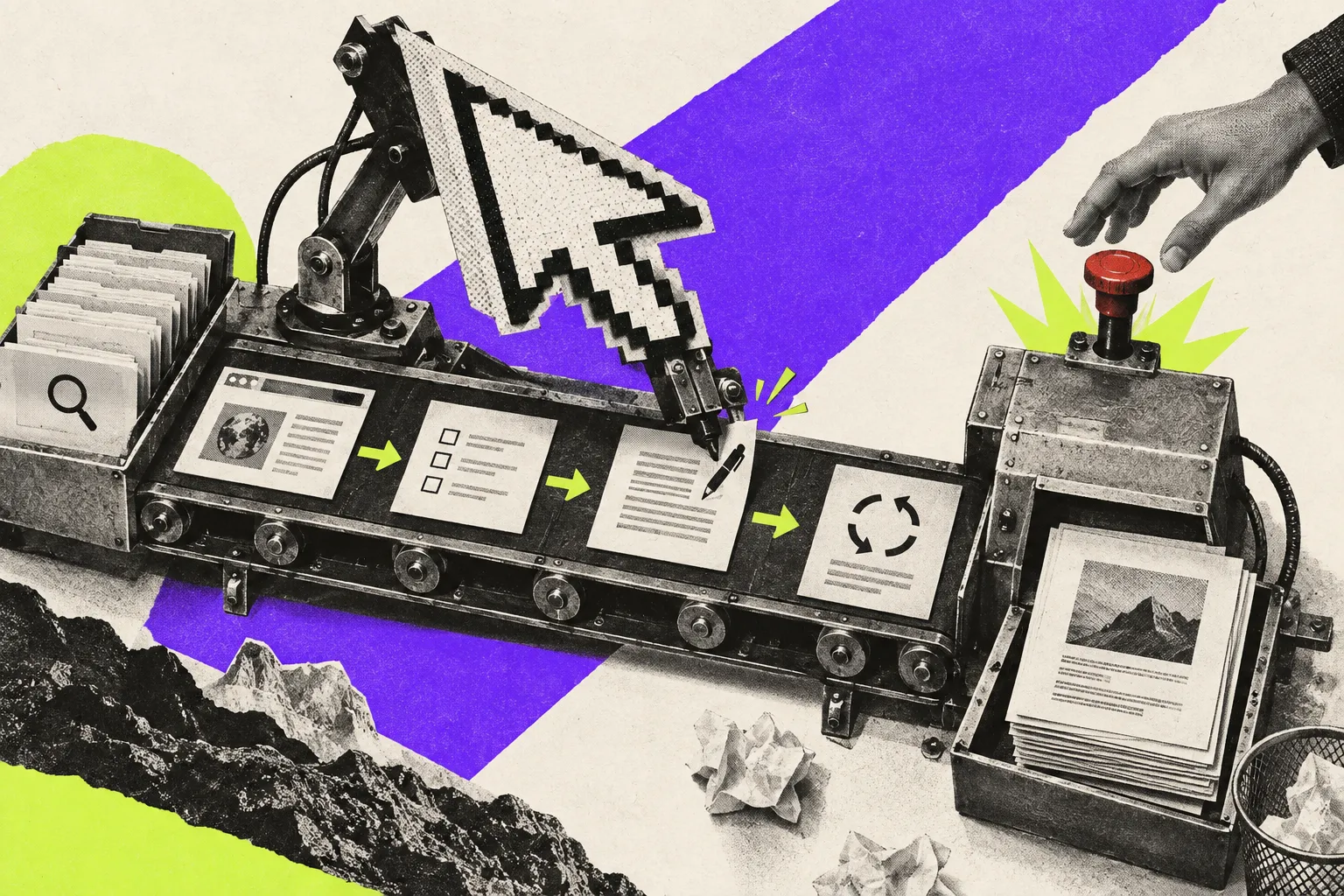
Ask a chatbot to outline a report and it can return text. Give an agent access to a folder, a search tool, and a document editor, and it can attempt the work: find evidence, create an outline, write a file, inspect it, and revise. The defining feature is this repeated loop of observation and action. The model is one component; the tools, permissions, memory, and checks determine what the complete system can accomplish.
Useful work has a finish line
Good starting tasks have a visible result: reconcile two lists, prepare a draft with sources, or fix a reproducible bug. Decide what must be true when the task is finished. A report needs supported claims and an opening file; a code change needs the relevant behavior to work. This prevents an activity log from being mistaken for completion. Agents can keep moving while drifting away from the original requirement, so the finish line must remain explicit.
The surrounding tools are getting better
The year’s announcements increasingly address the workflow around the model. OpenAI’s Agents API packages long-running cloud execution and tool orchestration. Mistral’s Agentic Search lets systems inspect documents iteratively. Grok Build’s memory carries project conventions across sessions. These products solve different pieces of the same problem: preserving enough state and feedback to continue useful work. Their announcements establish intended capabilities, not a universal reliability guarantee.
Memory needs maintenance
An agent that remembers a project’s test command can avoid repeating a mistake. An agent that remembers an abandoned decision can confidently repeat one. Useful memory should distinguish durable facts, current task state, and tentative assumptions. People need a way to inspect or correct it. More history is not always better: the objective is to bring the right context into the next decision and recognize when older information no longer applies.
Autonomy has a budget
A longer run can spend more money, call more tools, and make more changes before a person sees the result. Set limits that reflect the task: time, cost, permitted systems, and actions that require review. Start with reversible work and inspect the result before expanding authority. Parallel agents help when tasks can be separated; otherwise they can multiply coordination problems. A bigger swarm is not a substitute for a clear plan and compatible outputs.
People still define what matters
The most durable role for a person is not watching every keystroke. It is choosing the problem, deciding what a good result means, and making judgments that the available evidence cannot settle. Agents can reduce mechanical work and broaden what one person can attempt. Their value is best measured in accepted, useful outcomes and the effort required to supervise them. That is a more demanding standard than an impressive first response—and a more useful one.
Sources & authors
- Introducing the Agents APIOpenAI · September 10, 2026
- Introducing Agentic Search | MistralMistral AI · August 20, 2026
- Memory in Grok BuildSpaceXAI / xAI · September 16, 2026